
















IEC 62443 for industrial automation you can demonstrate

The international series of standards for securing industrial automation and control systems. Tidal Control helps you split the system into zones and conduits, set the target level per zone and provide evidence per system requirement.

  • Zones and conduits
  • Security levels 1 to 4
  • IEC 62443-3-2 and 3-3
  • Built in the EU
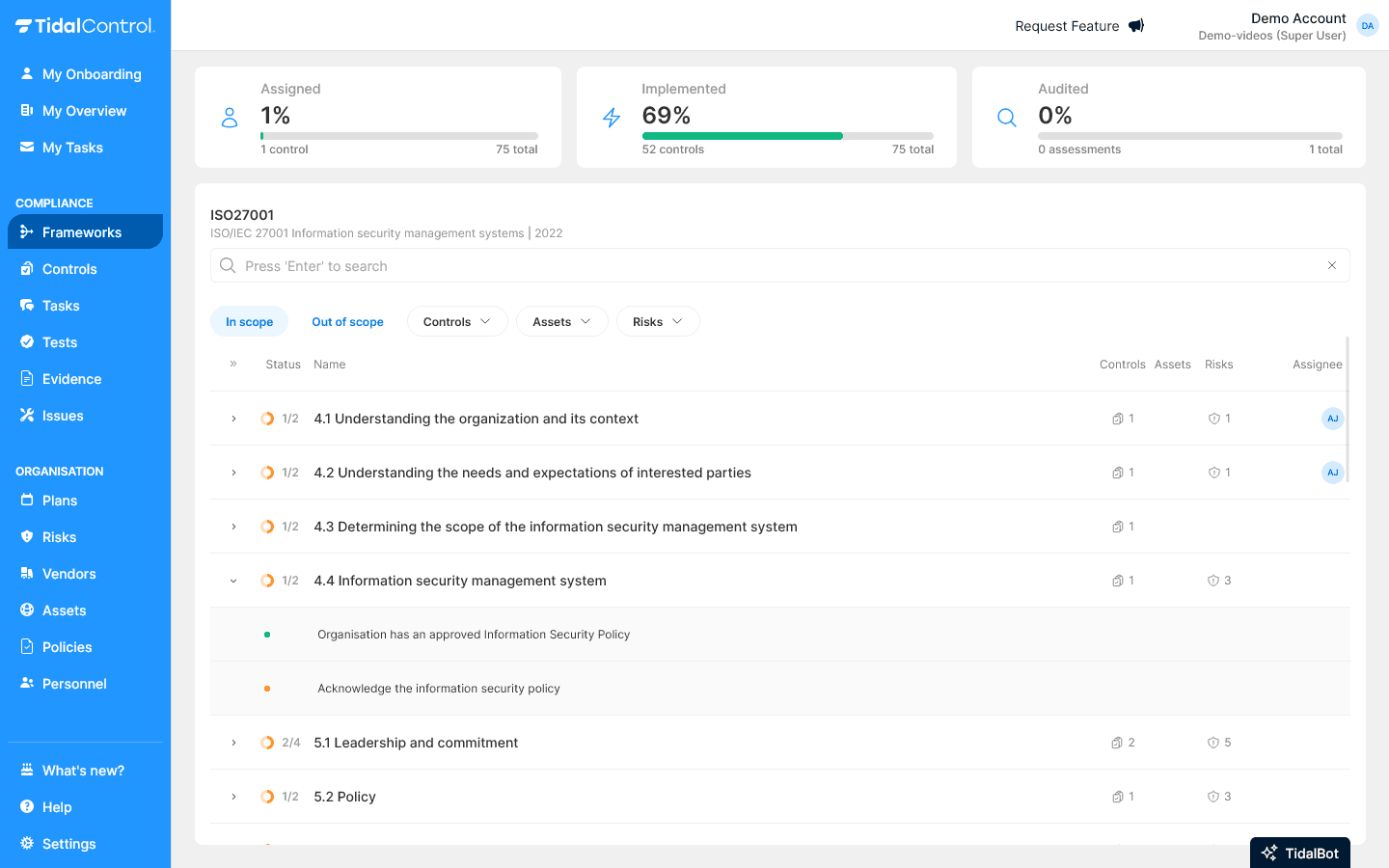
The IEC 62443 overview in Tidal Control with the status of requirements and evidence

These companies run their compliance on Tidal Control

  • LiveDrop logo
  • Datenna logo
  • CByte logo
  • Infradock logo
  • PoA logo
  • Floryn logo
  • ElasticScale logo
  • DebtCo logo
  • BrainStax logo
  • EnableNow logo
  • Woningnet logo
  • Nedscaper logo
  • Aivory logo
  • Fleetport logo
  • Promptwatch logo
  • Amsterdam logo

From risk assessment to certification

How long it takes depends on the size of your system and the target level. Tidal shows what is expected of your team at each step.

  1. Step 1

    Map the system

    Recording the system under consideration and its boundaries.

  2. Step 2

    Zones and conduits

    Grouping assets by security requirements, with the connections between them.

  3. Step 3

    Risk and target level

    Assessing risk per zone and choosing the target security level.

  4. Step 4

    System requirements

    Meeting the 3-3 requirements for the chosen level, with evidence.

  5. Step 5

    Certification

    Evidence ready for a certification scheme such as ISASecure.

  6. After that

    Keep it up

    Zones and controls updated through changes, and a sparring partner for new threats.

How Tidal helps with the foundational requirements

IEC 62443-3-3 orders the system requirements under seven foundational requirements. Tidal groups them into six and sets them up for you, with an owner, policy and evidence for each requirement.

security levels
4security levels
system requirements and enhancements in 3-3
100system requirements and enhancements in 3-3

IEC 62443-3-3

  • FR 1

    Identification and authentication

    Recognising users, devices and processes before they get access.

  • FR 2

    Use control

    Deciding what each authenticated user may do.

  • FR 3

    System integrity

    Preventing systems and data from being changed unnoticed.

  • FR 4

    Data confidentiality

    Protecting data at rest and in transit.

  • FR 5

    Restricted data flow

    Limiting traffic between zones to what is needed.

  • FR 6, 7

    Response and availability

    Responding to events in time and staying available.

IEC 62443 in brief

IEC 62443 is a series of international standards for securing industrial automation and control systems (IACS). It covers the whole life cycle and every role: the asset owner who runs the system, the integrator who builds it and the supplier of the components. Parts of it are certifiable, for example through ISASecure.

Dennis van de WielMax HovensMartijn Sprengers
Reviewed by Dennis, Max and MartijnFounders of Tidal Control, 45 years of combined experience in IT auditing and compliance
  • A recognised approach to OT security
  • A shared language with integrators and suppliers
  • Certification that industrial customers recognise
  • A base for NIS2 and the Cyber Resilience Act
  • Less chance of downtime from incidents

How you work on IEC 62443 in Tidal

From risk assessment per zone to suppliers: your OT security in one place.

Risk assessment

Risk assessments that work

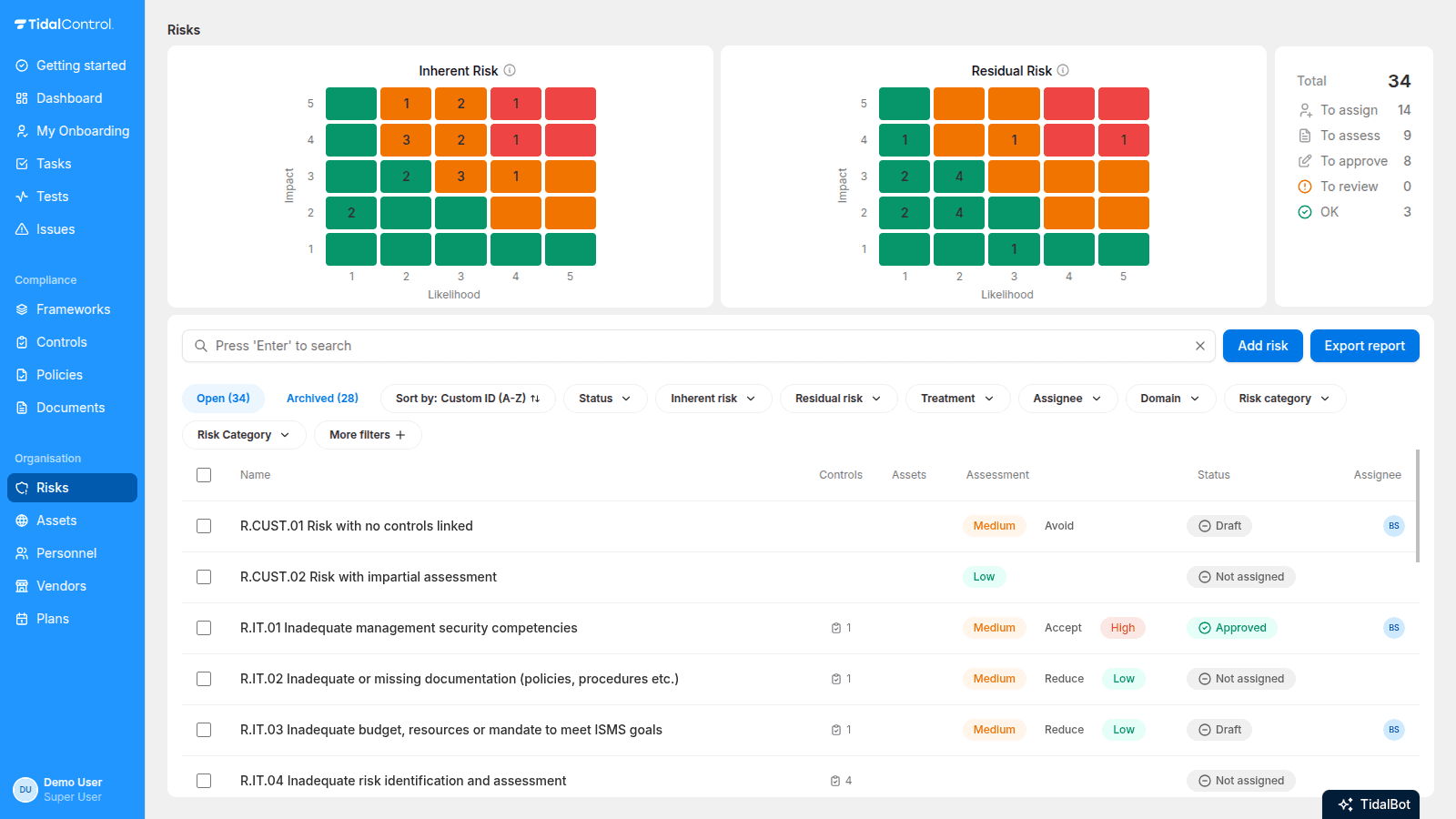
Turn risk assessment from a time-consuming task into a guided process that helps your business grow. Our AI-powered platform learns from your company's context to help assess and manage risks - even if you're new to the process.

Risk assessment in Tidal ControlRisk assessments that work
Controls management

Control management that works your way

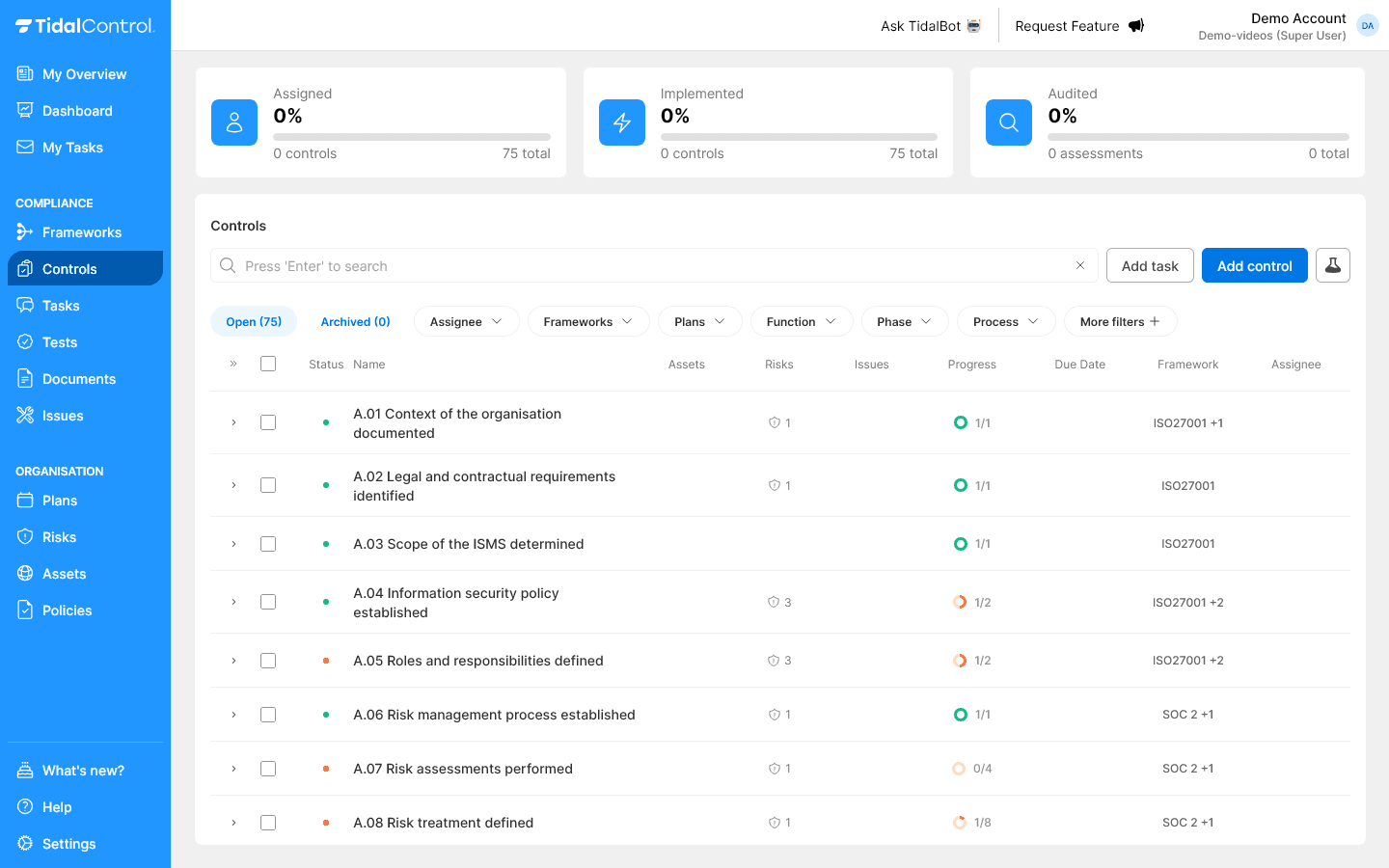
Simplify control management with flexible, automation-ready tools that adapt to your needs. Start with our control library or build your own - either way, you'll get powerful automation, clear ownership, and real-time insights.

Controls management in Tidal ControlControl management that works your way

Vendor management

Integrators and component suppliers in view

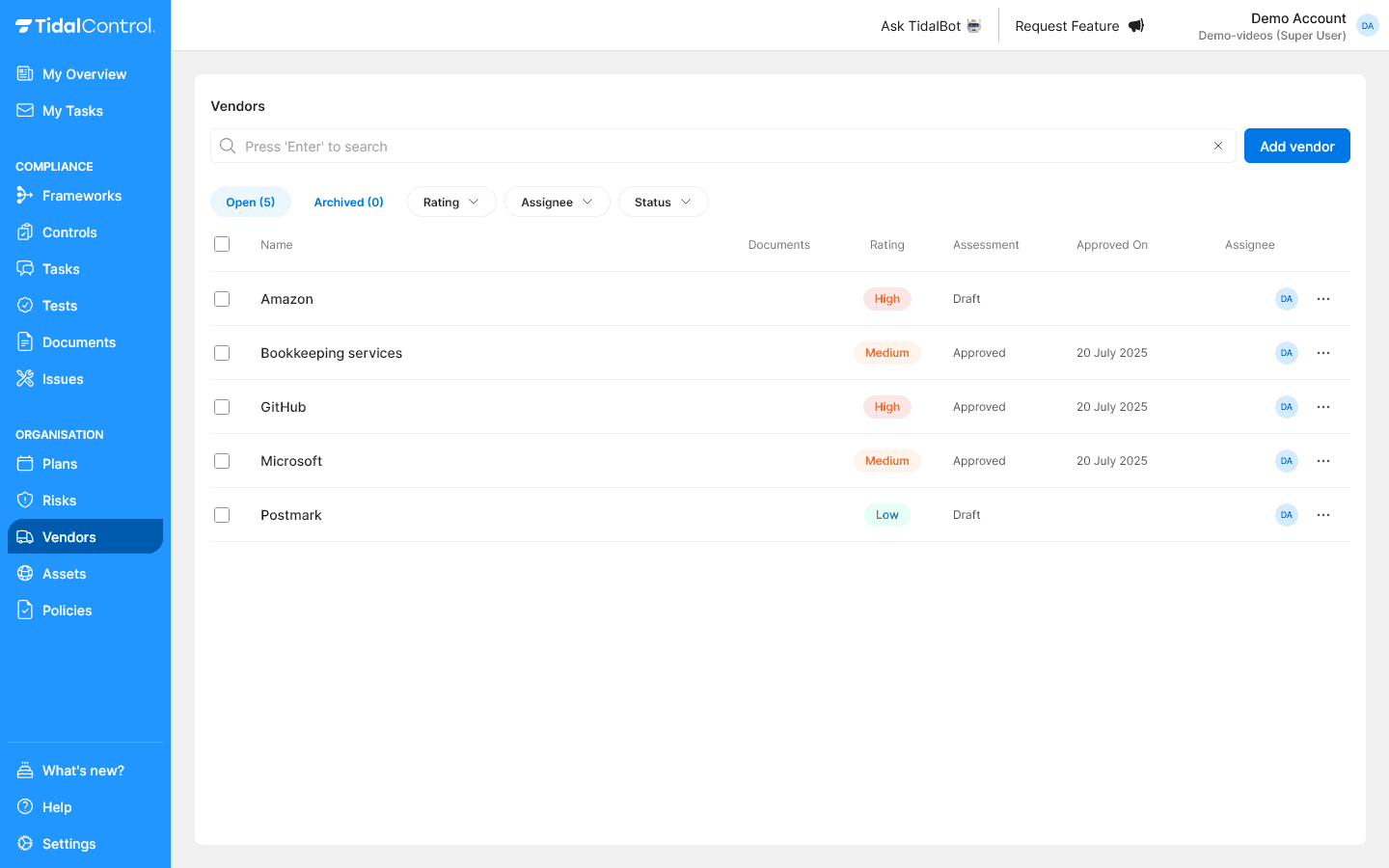
Record for each supplier which components or services it delivers, which security level it demonstrates and which agreements apply.

Vendor management in Tidal ControlIntegrators and component suppliers in view

Issues management

Track and resolve issues - all in one place

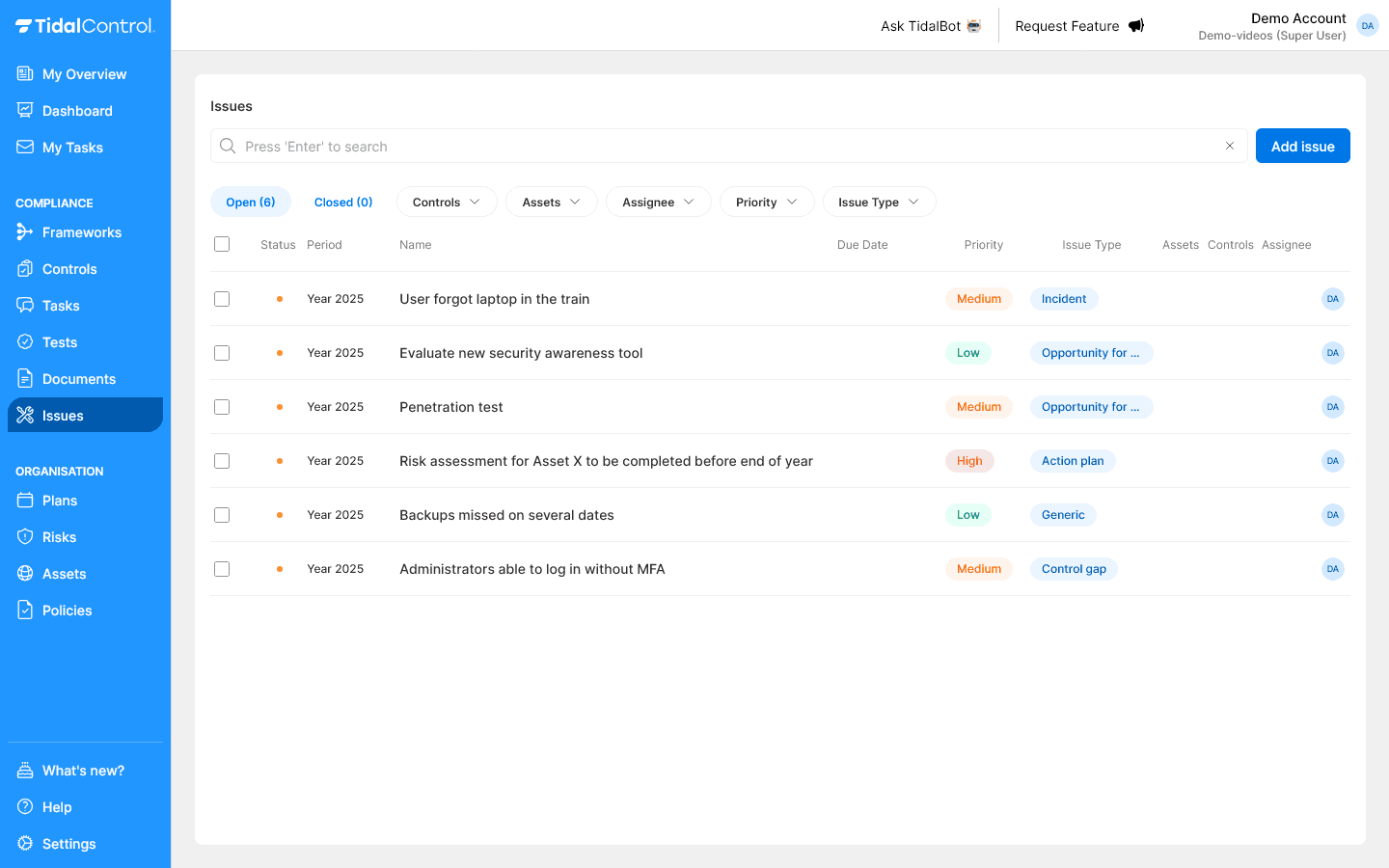
Simplify issue management with a centralised system that handles everything from audit findings to improvement opportunities. Keep your team aligned and ensure nothing gets missed with clear ownership, priorities, and automated tracking.

Issues management in Tidal ControlTrack and resolve issues - all in one place

Policy center

Policies without the hassle

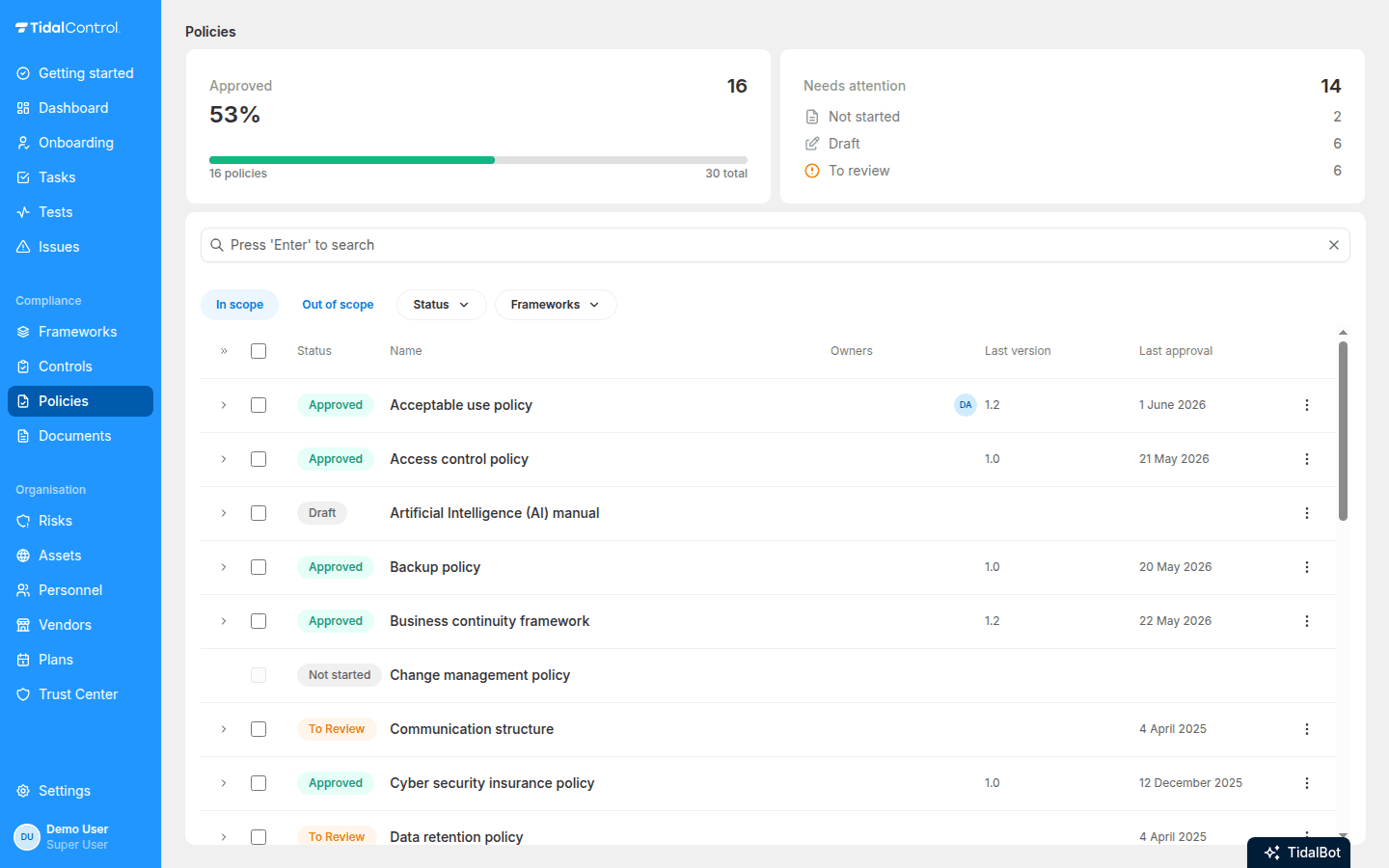
Turn policy management from a complex, time-consuming task into an automated process that grows with your business. Start with our pre-written policies designed for modern companies, or import your existing documents - either way, you'll benefit from smart automation that keeps everything on track.

Policy center in Tidal ControlPolicies without the hassle

Personnel & onboarding

Employee compliance without the spreadsheet

The Personnel module turns employee compliance (onboarding, policy acknowledgements, role assignments) into a self-service flow for your team. No more chasing email confirmations or maintaining a separate spreadsheet of who has accepted which policy.

Personnel & onboarding in Tidal ControlEmployee compliance without the spreadsheet

Integrations

Automation makes life more fun!

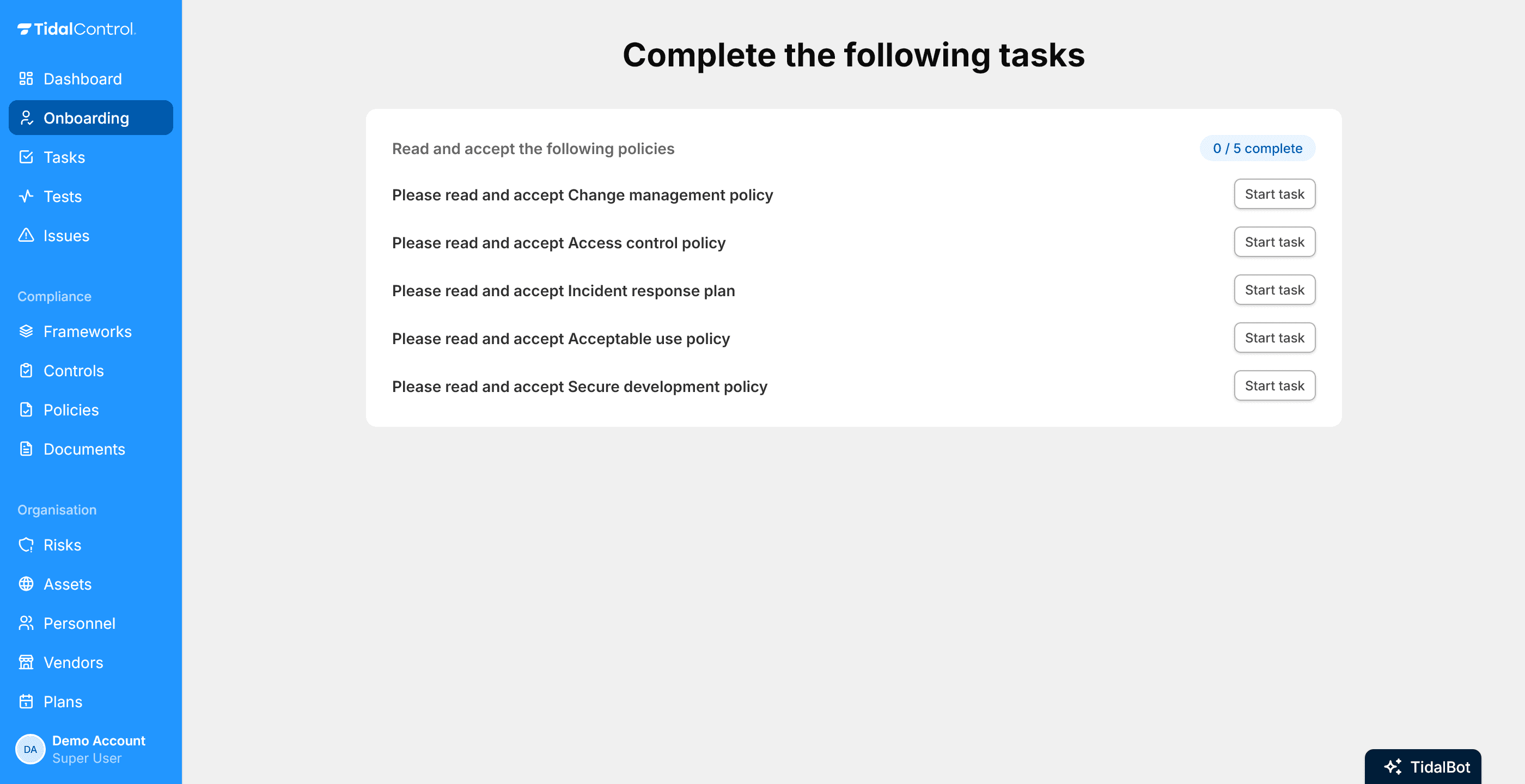
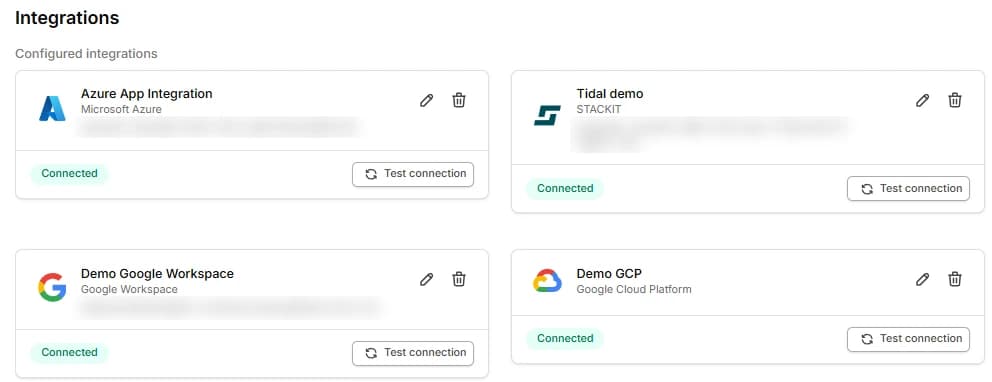
Our integrations collect and evaluate evidence for you, saving you the time of preparing system reports and screenshots every time you need to run a control test.

Integrations in Tidal ControlAutomation makes life more fun!

Manual vs. with Tidal Control

  • Zones and conduits

    Manual

    Drawings nobody updates

    With Tidal

    Recorded with risk and target level

  • System requirements

    Manual

    A spreadsheet with 100 rows

    With Tidal

    Pre-mapped per security level

  • Evidence

    Manual

    Documents spread across sites

    With Tidal

    Per requirement in one place

  • IEC 62443 and NIS2

    Manual

    Two projects side by side

    With Tidal

    One set of controls, evidence once

  • Keeping it up

    Manual

    Lapses after the project

    With Tidal

    Updated through every change

Testimonials

What our customers say

With a single click, one Tidal test checks dozens of disks for encryption. Doing that manually would take a lot of time.

Profile picture of Chiel Bos
Chiel Bos
COO·CBYTE
CBYTE logo

See all success stories

Integrate with your existing tools

IEC 62443 software and certification

IEC 62443 asks for a structured approach: splitting the system into zones and conduits, setting risk and the target security level per zone and then meeting the system requirements for that level.

In drawings and spreadsheets that coherence is easily lost, especially when the installation changes. IEC 62443 software records zones, risks, target levels and requirements and links each requirement to evidence.

Tidal supports IEC 62443-3-2 and 3-3 as separate frameworks, because they are certified separately too.

Frequently asked questions

IEC 62443 is a series of international standards for the security of industrial automation and control systems (IACS). It covers the whole lifecycle and every role involved: the asset owner who runs the system, the system integrator who builds it and the product supplier who makes the components.

Tidal supports two parts, each as its own framework. IEC 62443-3-2:2020 covers security risk assessment for system design, with 32 zone and conduit requirements in seven groups. IEC 62443-3-3:2019 covers system security requirements and security levels, with 51 system requirements and 49 requirement enhancements, 100 references in total. The parts are certified separately, which is why each is its own framework.

A zone is a group of assets with the same security requirements, such as a control network or a safety system. A conduit is the communication path between zones. IEC 62443-3-2 has you divide the system into zones and conduits, assess the risk for each, and set a target security level that IEC 62443-3-3 then turns into requirements.


IEC 62443 defines four security levels. SL 1 protects against casual or accidental violation, SL 2 against intentional violation with simple means, SL 3 against sophisticated means with moderate resources and SL 4 against sophisticated means with extended resources. In IEC 62443-3-3 each system requirement and requirement enhancement applies from a given security level, so a higher target level adds requirements rather than changing them.

Yes. Certification schemes such as ISASecure and the IECEE CB scheme certify systems, products and processes against parts of the series. IEC 62443-3-3 backs the ISASecure system certification, for example. Tidal keeps the evidence per requirement so you can bring it to whichever scheme your customers ask for.

Many organisations that run OT fall under NIS2 or the Cbw, and manufacturers of industrial components fall under the Cyber Resilience Act. Neither law names IEC 62443, but its risk assessment and system requirements are a recognised way to meet their duty of care and product requirements for industrial environments. Tidal lets you map them onto each other.