Stage
Enterprise compliance across entities and standards
Multiple entities, multiple standards, and an audit burden that must not scale with your headcount. One source of truth for the whole programme, with role-based access, reporting into your own BI, and an account manager who knows your dossier.
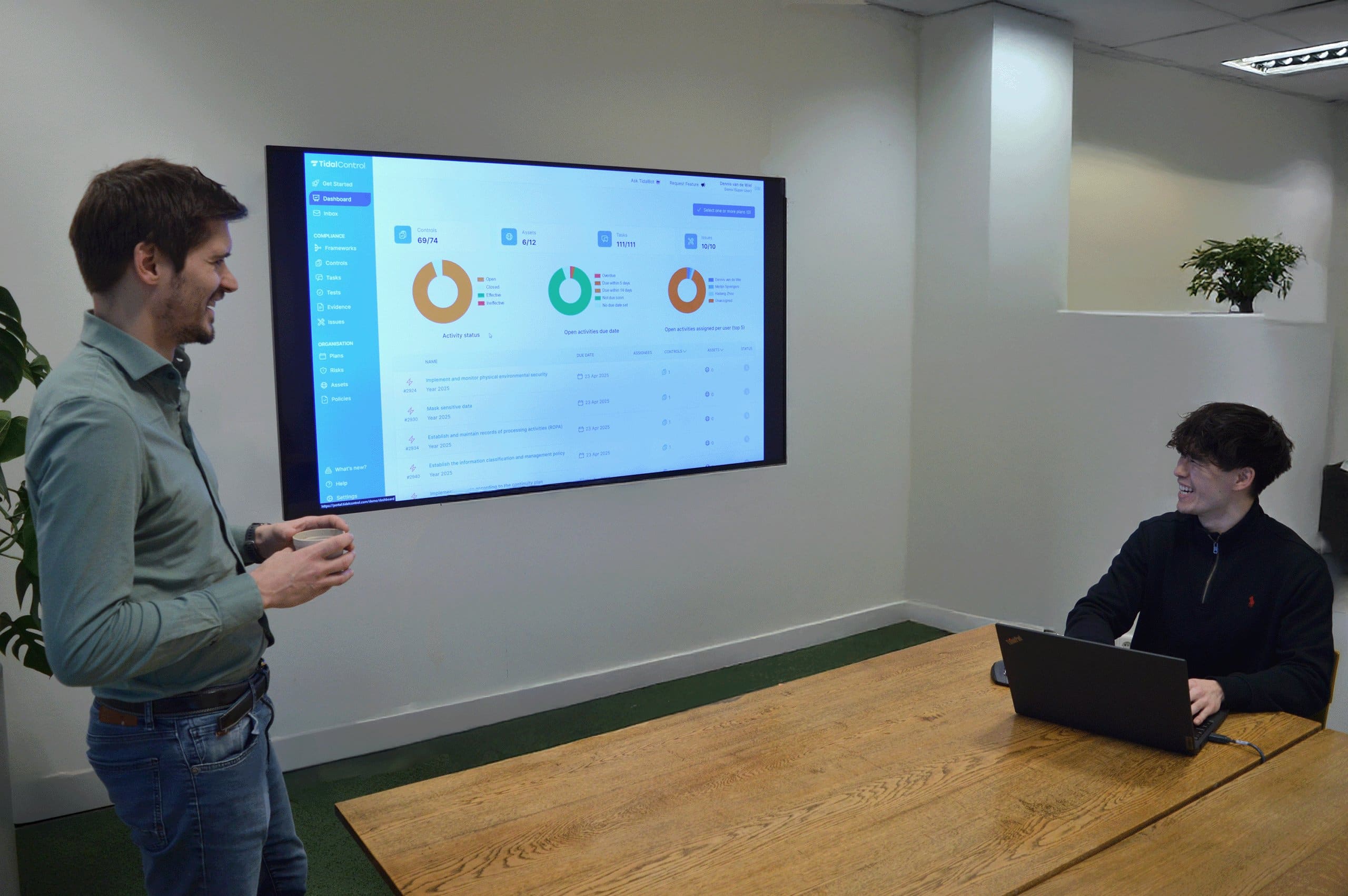
The plan that fits this stage
Scale gives you unlimited frameworks, advanced permissions and PowerBI reporting. Need custom contract terms or an SLA? We agree an Enterprise arrangement.
Scale
Unlimited frameworks and advanced controls for growing organisations
€1,699/monthBilled annually
- Unlimited frameworks
- Advanced user permissions
- PowerBI reporting
- Personal account manager
- Single Sign-on
Enterprise
Custom solutions for large organisations with complex compliance requirements
- Custom contract terms and SLA
- Enterprise support included.
These companies run their compliance on Tidal Control











Why Tidal fits this stage
The question is not whether you are in control, but whether you can demonstrate it across the whole organisation, year after year.
Unlimited frameworks, one overview
Manage every standard and regulation that applies to you in one place, with central visibility of where you stand. Evidence you assign once counts for every standard the same control appears in, however many there end up being.
Permissions that match your structure
Role-based access for complex team structures and Single Sign-on through your own identity provider. People see what they are responsible for, without you splitting the system into separate environments.
Your own policies, your own reporting
Connect existing policies from SharePoint or Notion rather than migrating them, and report in real time through PowerBI into the dashboards your organisation already steers on.
A contact who knows your dossier
A dedicated account manager, 1:1 onboarding and priority support. When an audit or a change to a standard comes round, you talk to someone who knows how your programme is set up, not to a queue.
What enterprise organisations usually manage
Rarely one standard, and rarely for one entity.
Frequently asked questions
Yes. You manage the standards and controls centrally and keep visibility of where each entity stands. That is precisely the difference from an approach where every entity has its own spreadsheet and its own audit preparation.
Policies can be connected from SharePoint or Notion, evidence comes from your cloud and identity environment, and reporting goes through PowerBI into your own dashboards. Tidal becomes the source for your compliance dossier without you moving the rest of your stack.
Yes, both. Single Sign-on through your own identity provider, and an authorisation model that follows permissions by role, so a large user base does not get visibility into what does not concern them.
Unlimited frameworks also means you are not stuck with a list. If a standard or an internal framework is not there yet, raise it with your account manager.
Internal audit reports and management reviews build themselves from your live data, with the history attached: who changed what, and when. Internal audit then works in the same dossier as the external auditor, rather than in its own copy.